Tuesday, 19 June 2018

A Guide To Choosing The Perfect Pillow

Are you sleeping on the right kind of pillow?

We all sleep differently, and we all have different needs, so it follows that we may need different types of pillows to give us the best night’s sleep.
If you’re not sure which kind of pillow is right for you, follow these simple steps to find out.

Most of us have a go-to sleeping position that we adopt and usually maintain throughout the night. You may not realise it, but the position you like to sleep in largely dictates the kind of pillow you should be sleeping on in terms of thickness and firmness.

Do you know which position you usually sleep in?


If you’re not sure, spend a few nights paying attention to and taking note of the position you go to sleep in and the position you wake up in. If it’s largely the same position over and over again, you’ll know this is the position you sleep in most of the time. If it’s always different, that’s OK; there’s a pillow type for you too.
Here are the four main sleeping positions and the best pillow types to suit them:

Stomach sleeper – If you lie flat on your front with your head to one side, you should look for a relatively flat, soft pillow or even use no pillow at all. This is because you’ll need to keep your neck aligned with your spine in order to avoid neck pain and posture problems from straining your neck throughout the night, and thinner pillows help you do this.

Back sleeper – If you like to sleep on your back, you should aim for a pillow of medium thickness and firmness. If your pillow is too thick, your head will be pushed forward at an uncomfortable angle, and if it is too thin and soft your head will sink too far back towards the mattress. A medium thickness should keep your neck and spine well aligned for a comfortable sleep.

Side sleeper – If you’re a side sleeper, which is one of the most common positions, you’ll need a pillow that is both thick and firm in order to support your neck and keep it aligned properly with the spine. If your pillow is too soft, your neck and head will lie at a very unnatural angle to your spine and can lead to neck pain.

Mixed sleeper – If you find yourself sleeping in all sorts of positions throughout the night, you should choose a fairly soft pillow of medium thickness. This will allow you to remain comfortable in a variety of positions, and provides a happy medium in terms of support from all angles.

Now that you know what thickness and firmness you should be aiming for, it’s time to look at fillings. Your filling will somewhat dictate how thick and firm your pillow is, so getting this right is very important.
Also affecting your choice of filling are personal preference, allergies and price. Here are the four main types of pillow fillings and their attributes:

Synthetic microfibre pillows

Microfibre pillows are great for sleepers who suffer from asthma or allergies, as they are hypo-allergenic with purely synthetic hollowfibre fillings. Microfibre pillows also come in a range of thicknesses and levels of firmness, so you can find a pillow that perfectly suits your sleeping position. Synthetic pillows also tend to be budget friendly, costing less than wool or feather and down pillows.

Wool or cotton pillows

Another great selection for those suffering from severe allergies, cotton and wool pillows are resistant to mold and dust mites and are naturally very soft. Wool pillows do tend to be rather thick and firm, however, so these may not be the best choice for you if you’re a stomach sleeper. Because of their natural fibres, wool and cotton-filled pillows do tend to be further up the pricing scale than synthetic choices.  

Goose and duck feather pillows

Duck and goose feather pillows tend to be the most luxurious, and are therefore among the most expensive on the market, so make sure you take this into account. As they are filled with the inner plumage of ducks and geese, these pillows are understandably often avoided by those who suffer from animal allergies and asthma. However, if you don’t suffer from allergies, these natural pillows are great for providing varying levels of support and are very soft and breathable.

Memory foam pillows

If you suffer from neck or shoulder pain, memory foam pillows can be very helpful in keeping you comfortable and providing firm support for your neck. The main downside to memory foam pillows is that the foam is not very breathable, but the level of support makes them a very comfortable option for side sleepers in particular.

Once you’ve found your ideal pillow thickness, firmness and filling, you’ll want to keep your pillows well protected. To keep them clean and in tip top condition, you should use pillow protectors which will help shield your pillows from sweat, body oils, hair products and saliva.

You can buy hypoallergenic pillow protectors if you suffer from allergies, or you can go for a touch of luxury with super soft Egyptian cotton pillow protectors. Whichever type you choose, make sure you change and wash your pillow protectors regularly to keep everything fresh and hygienic.

Having the right pillows is one thing, but knowing when to replace them is just as important. Not all types of pillows have the same life span, and once they start to sag they will no longer provide the support you need, or the same level of comfort.

So how do you know if your pillow needs replacing? A foolproof trick is to simply place the pillow over your arm. If it stays rigid and holds its shape, it’s still in perfectly good nick. If, however, it sags over your arm, it might be time to replace it.

If you’re at the stage where you need to replace your pillows, or if you’ve realised you’re using the wrong pillow type - visit The Bed King in your area or view their range of various pillows.


Friday, 4 May 2018

What Does Your Mattress Say About You?

Sleep is the new luxury and your bed has become a fetish object


Marilyn Monroe © REX/Shutterstock
I last purchased a mattress about six years ago. As I remember, it required a five-minute waltz around the British homewares store John Lewis, a bit of bouncing and some fairly animated discussion about springs per square centimetre vis-à-vis memory foam which, at the time, was considered rather common. Some were stuffed with horse hair or wool, which in days gone by would have required restuffing or “carding” by an experienced professional.


I walked away with something that cost the same as a second-hand car and strict instructions that I must turn it every month in order to preserve its unique temper. Needless to say, it hasn’t moved a millimetre since being hauled up the stairs and onto the bed frame.


I never expected to give any further thought to mattresses, but lately I have found myself besieged with urgent information on the subject. Every Tube carriage proliferates with signage advertising conical pocket springs, promising “the best night’s sleep of your life”; every podcast is interrupted by some sponsor blathering on about “Airgocell layers” and “viscoelastic memory foam”. I stay in glamorous hotels that offer “pillow menus”, and make decidedly non-glamorous stops in motels that boast of their “king-size Hypnos beds”.


Could it be that other people are getting a better night’s sleep than I? And on cheaper bedding, too? This has piqued my full attention.


The great mattress disruption probably began with the advent of start-ups such as the US-based Casper, and the UK’s Eve and Simba, all promising cheaper, sleep-optimised technologies in straight-to-consumer businesses, part of a drive to crack what is estimated to be a $15bn market. Sales have been brisk. Casper, which launched in 2014, has seen its revenues triple to $300m in its first three years and has since launched pillows and dog beds. According to Forbes, online mattress sales could soon account for more than 10 per cent of the market.


It’s telling that even a mattress, that dull old lump of sponge, is now an essential chapter in our ‘story’


Likewise, the beauty industry is burgeoning with sprays, potions and unguents designed to aid better sleep. Fashion has become newly taken with “loungewear” — another word for pyjamas worn during the day — which has been identified as one of the fastest-growing categories by the luxury retailer Matches.com.


The subject — and science — of sleep has possessed our cultural lives, too. Arianna Huffington has built a second empire based on her TED talk and now bestselling book The Sleep Revolution, in which she advocates for eight hours sleep by eliminating mobile phones from her “sleep sanctuary” (or bedroom) and lighting candles instead. And there are a bazillion new sleep aids, apps and gizmos designed to facilitate swift passage to the land of nod. They even gave the Nobel Prize to those dudes who unlocked the chronotype, elucidating the inner workings of the biological clock, and excusing our habit for sleeping until midday as part of our genetic birthright.


At a time when we’re getting less of it than ever, sleep has become a very sexy subject — the bed a fetish object. The “Sleep in America” survey, conducted in 2008, found that 44 per cent of those polled weren’t getting the average of seven hours and 18 minutes sleep a night they needed to feel “their best”. The UK-based Sleep Council says a third of Britons survive on five to six hours sleep a night.


But hang on a second. The temptation to cast westerners as the woefully sleep-deprived victims of a capitalist culture that allows us no rest seems a bit rich, does it not? We’re not working down the mines any more, after all, or currently being shelled. Moreover, a good part of this new sleep obsession is actually being funded by the very agencies flogging us the sleep aids in the first place.


In 2015, Casper, the mattress company, launched a media offshoot called Van Winkle’s to “make sleep journalism a thing”. According to Jeff Chapin, co-founder and chief product officer at Casper, their objective was not only to sell mattresses but to start a “narrative” so that sleep became “part of a lifestyle”. Last month Van Winkle’s was wound down to re-emerge as Woolly, an online magazine about comfort and modern life which, according to a spokesperson, “emerged from Casper’s founding philosophy that sleep — in addition to food and fitness — is the third pillar of wellness.”


Creating a narrative is one of the weirder, more pernicious trends in recent years, affecting everything we buy, from bananas to handbags. It’s telling that even a mattress, that dull old lump of sponge on which you throw yourself each night, has become an essential chapter in our “story” — something we’re willing to pay for because it expresses some aspect of a lifestyle we hadn’t realised needed expressing until now. Sleep, once considered to be a basic life-sustaining necessity, a daily event that, unless one suffers from insomnia or small children, occurs as naturally and inevitably as blinking has now become a commodified, luxury experience.


Here’s another story. It’s quite short but I think it too could transform your own sleep narrative. Want to get more shut-eye? Try going to bed a bit earlier and research the best beds available. The Bed King have a marvelous variety of beds - there’s bound to be one to suit your needs, as well as your pocket.

Wednesday, 21 February 2018

Best Beds for Apartments: Maximising Space and Storage


Hardly a week goes past in New Zealand without us being reminded that how and where we live is changing dramatically from the traditional quarter-acre section, to modern apartment blocks and townhouses.
In Auckland 343 apartments have been completed in 2017 and a further 873 CBD units are under construction and due to be finished this year, and judging from the response to a bed-exhibitor stand at the Auckland Home Show in September, it’s clear that many Kiwis are coming to terms with some of the lifestyle changes required when you have to be more economical about your living space.
Bedpost franchisor Julia Doak says most of the interest from those who visited the Auckland Home Show was in “beds that have added functionality” – ie beds that include storage.
“This is new territory for many New Zealanders,” Julia says. “People are always nervous about the amount of storage they’re going to have when they live in an apartment, so utilising the space under the mattress makes complete sense.”
As well as choosing a bed frame with space under the mattress, as opposed to a mattress and base, the main two options for purpose-built storage when it comes to modern bed design is either in-frame draws.
Retailing for around R13000 for the queen size base, the Brooks frame is perfect for apartment living:
  • It comes flat-pack so it is easy transported up stairs or via elevators to be assembled in the bedroom.
  • It is aesthetically designed with built-in headboard and the perfect “hideaway” storage space to cut out the clutter.
  • It is extremely compact, coming in a range of sizes which are essentially the same footprint as the mattress.
  • It is extremely durable with Julia saying they’ve purposefully over-engineered its capacity so that it is able to support any style or size of mattress people choose to put on it.
The key elements to choosing a bed for apartment or townhouse living are all centred around space and access so don’t be surprised that when you come in to The Bed King store to choose a style of bed and mattress, that’s one of the main things that our sleep specialists will talk to you about.
It’s important to come fore-armed with information about the size of your bedroom so you know what size bed is suitable for the space, but, unless you’re keen to hire a crane to lift a bed in though an upstairs window, it also pays to know what size frame, base and mattress is capable of getting through all the doors, stairways, corridors and elevators usually associated with apartment blocks.
“When someone has a single level home then access is rarely a problem,” Julia says. “But even the best penthouse apartments usually have to use the same elevator as everyone else and that’s where the challenges can be.”
The main issue is with queen size bases. Sizes below that – say double beds at 188cm at its longest – usually fit, and kings and superkings come with split bases anyway. One option for a 203cm queen size is to choose a lower profile base, which makes it easier to get through doorways and into the bedroom.
“With mattresses,” says Julia, “it’s easier to manipulate them around corners but you can’t do that with a big wooden piece of furniture so it’s important to know that a bed will fit before buying it and organising delivery.”
If you are one of the growing number of people living in an apartment and you are planning to buy a new bed or mattress, you can visit The Bed King to see what would fit into your space, get expert advice on mattress sizes, double beds on offer and more.
Article source: https://www.bedpost.co.nz/Hot-Tips/best-beds-for-apartments-maximising-space-and-storage/

Tuesday, 20 February 2018

How to Buy a Bed for a Child


Let's face it there are some pretty outstanding beds out there for the more adventurous parents wanting their kids' rooms to stand out from the crowd.
But as well as fulfilling a dream of a fairytale castle, a dinosaur's lair or even the world's largest nest, it's vital for parents to know their children are getting the greatest night's sleep possible, the healthiest mattresses and pillows and the best value for money.


If you are moving your child out of a crib and buying kids beds for the first time, your first step is to head into a Bedpost showroom to get an expert opinion on what's best for your child, your budget and your home.

The key questions you need to ask are:

1) Do I need an interim toddler's bed or should I invest in a bed which will last until they're a teen? The height of the bed, or choosing a bed which can work as a bunk and then uncouple to a regular bed may be considerations to help your investment last longer.
2) Is the bed going to be sturdy enough to deal with the type of heavy-duty monkeying around that children are sure to give it? There's no avoiding the fact that a bed will double as a trampoline for a few years at least!
3) Is the mattress hard-wearing? You're going to have to research mattress protectors and make sure your choice of bed is easy to clean. Bed-wetting is often a difficult subject to tackle but the right choice of bed and mattress can help both you and your child deal with it.
4) Is this bed value for money? If you're buying for a slightly older kid - say from seven or eight into their teens - then you should look for options which offer storage, durability and which help your money go a little further. After all, this is the time when your growing children are costing you most in terms of clothes, food and outings so you need to make sure you're making a practical purchase.
5) Is this bed right for my child's room? There's a foot and a half difference in width between a single (92cm) a king single (107cm) and a double (135cm) mattress so it's vital you know your room's dimensions and also consider that growing children may be more comfortable in the wider option if space allows.
6) Is this bed right for my child? This is the most important consideration and you can't make it without actually having your child in tow when you go to buy their new bed. Get them to test-rest any mattress in the same way you would for your own new bed and ask any Bedpost expert to help.


Whether you're buying baby's first bed, making that move to "big-kid status" or coping with the practicalities of a growing teenager, making the right choice relies on being properly informed of your options. And once you've asked for expert advice from The Bed King on kids beds, then you can get about organising how to decorate for your princess, dinosaur hunter or baby bird! Visit The Bed King for more information, advice and ideas for kids beds.

Article source: https://www.bedpost.co.nz/Hot-Tips/how-to-buy-a-bed-for-a-child/

Thursday, 18 January 2018

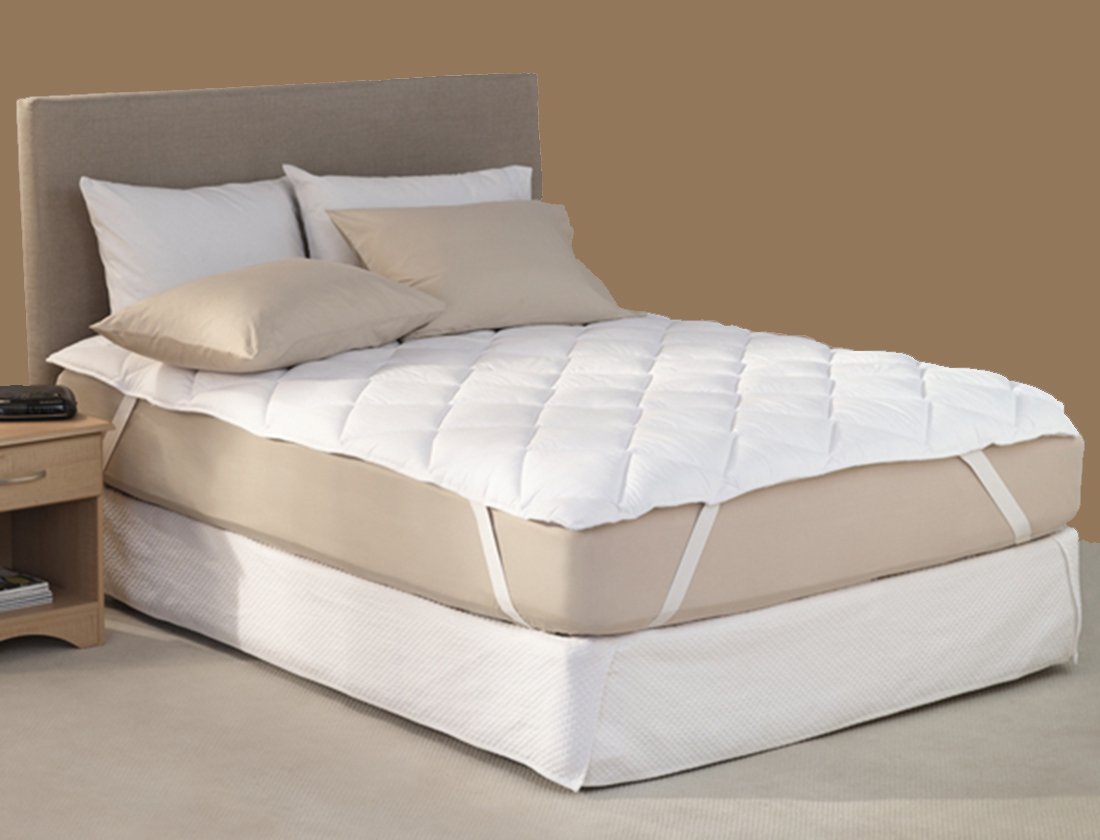
The Importance of Mattress Protectors


We have all been in the situation when we have bought a new pair of
shoes and the salesperson tries to sell additional sprays, polishes,
shoe-guards and various other accessories. We might compare this type
of “upselling” to acquiring a brand new mattress. If the product is
completely satisfactory and to our exact specifications, why should we
spend more money getting a protector for it?
The fact is, it is a false economy NOT to invest in a mattress protector. It really is
the equivalent of going out in the rain without an umbrella – put
simply, you will end up regretting it!


Protecting your Warranty as Well as your Mattress

A new mattress will come with a warranty. The main purpose of the
warranty is to protect the consumer from any defects in the
construction. This covers a variety of issues: for example, maybe the
mattress will start to sag. If it dips in the middle, without anyone
being on it, up to or beyond an inch in measurement, then you have a
right to make a claim.
Broken coils are another possible problem. These may work their way out
through the fabric and poke out. The stitching on the seams can come
undone, or a foam topping can end up being bunched up and
uncomfortable. Any of these physical defects can be used to validate
the warranty and obtain a replacement. However, the warranty will be
null and void if the mattress has a stain on it.
Yes, a legitimate claim cannot be accepted if there is any mark or
stain on the mattress whatsoever. You may think you are extremely
careful, never spill a drink in bed, nor sweat heavily, but you would
be amazed how moisture can seep through after many nights of regular
use. Liquids can wear down the fabrics of the mattress wadding. And it
is not simply perspiration: our bodies also excrete oils, they shed
skin cells, and they may leave traces of make-up, saliva, or blood.
A standard bed sheet is no barrier to these excretions going straight
through to the mattress underneath. The minerals and salts in these
leaks dry out and discolour, and we end up sleeping on top of these
ugly stains. The only solution is to fit a mattress protector that
absorbs these fluids, which can then be taken off and washed
separately. This will keep the life of the mattress in a “good-as-new”
state for a great deal longer, and preserve the date of the warranty.


Protection from Dust Mites

Another huge benefit to a mattress protector is that they create a
shield against dust mites. Allergies to these little critters can cause
all sorts of problems, from a runny nose to wheezing and shortness of
breath. If you don’t fit a mattress protector, your dead skin cells
will drop down onto the mattress itself, and dust mites will feed on
these. It is not a pleasant thought, but luckily there is an effective
way to prevent it, and that is the quick and easy fitting of a
protector. Without one, the mattress can effectively become a breeding
ground for mould and bacteria, and if left undisturbed those dust mites
will multiply.
By the way, a mattress protector should not be confused with a mattress
pad or topper. A
hand, creates another layer of padding, as does a topper. Ideally, if
your mattress is carefully chosen to suit your needs, you won’t need
any additional help to make it comfortable.


How to Choose your Mattress Protector

So what type of protector should you choose? You want the protector to
have the ability to wick away the moisture and heat emanating from the
body. A breathable fabric is the best for this. Less expensive options
feel more like plastic, and are not as breathable, but they are still
waterproof. Some people are concerned that a waterproof protector will
be crinkly and hot to sleep on. As long as the material used is at
least partially breathable, this should not be a concern. Polyurethane
(PU) is a waterproof membrane which is undetectable when you lie on it.
Actual plastic or rubber should be avoided, as these materials do not
allow the air to circulate, and therefore they can lead to overheating.
Mattress protectors on every bed in the home really are a necessity to
guard against stains and dust mites and to prolong the life and health
of the mattress and those who sleep on it. A stained mattress cannot be
exchanged, and this would be a great shame if for any reason you had a
legitimate reason to need to redeem the warranty. When buying a new
mattress, do not hesitate to purchase a protector at the same time, and
put it on as soon as you get home. You won’t even know it’s there, but
it will be providing an invaluable service.


Be sure to visit The Bed King for your mattress protectors to ensure your mattress has a better chance against dust mites and retains its warranty! The Bed King offers mattress protectors for all bed sizes!

Article source: https://thesleepshop.co.uk/blog/the-importance-of-mattress-protectors/

Sunday, 7 January 2018

Maximise your space with these functional design tips


Duality of design is the concept of using clever ideas to use the space in your home to its full potential. Here’s how you can use it.
The concept of duality in interior design is not a new one. Examples of this are sleeper couches and beds that fold away into walls in order to create the illusion of an extended floor space. However, over the years, this concept has become more concise and a lot more practical in terms of application.
Urban property developers, Blok, are huge advocates of duality in functional design within urban homes. They ensure that when they develop an idea, they incorporate spaces where the use of clever design leads to spaces being maximised to their full potential, which would normally be considered as passive space.
To give some insight into how to duplicate this technique in your own home, WAUW’s lead architect and member of Blok’s development team, Eric van den Berg, shares some tips:
“Firstly, look for dead corners or areas that take up a lot of floor space but serve only one function. Often open spaces such as entrance lobbies, passages and staircase landings could easily be used for another purpose such as a storage area,” says Van den Berg.
Eric also advises that no matter the size or shape of your space, all you need is a little imagination. “There are a number of ways you can use empty gaps. Try turning them into a study, bar, daybed or reading nook; the possibilities stretch as far as your creativity allows.”
He shares that people are not as set on hiding personal items away as they once were and are instead celebrating them in their homes. For example, hanging your bicycle or positioning your surfboard in your entrance hall, almost as an installation instead of functional equipment that must be stored away, is a clever use of those unused sections in your home, also known as a ’third spaces’.
Van den Berg continues, “The simpler the design, the more creative you can get. However, if the plan is less complicated, you will need to put a lot more thought into it. An example is turning the unused gap under a flight of stairs into a bar area, thus alleviating pressure from the kitchen or dining area and creating something that is entirely new.”
“In the end, if your unused space serves its original purpose and other functions whilst simultaneously adding to the character and design aesthetic of the rest of the home – you have a winner,” concludes Van den Berg.
For advice on the best beds and sleeper couches Cape Town has to offer - visit The Bed King here.